
You do not need AI because it is fashionable. You need to look at it because the way customers deal with businesses has changed, and the work behind the scenes has not always kept up. This post explains what updating your operations with AI really means, and how to do it without turning your business upside down.
What “updating operations” means
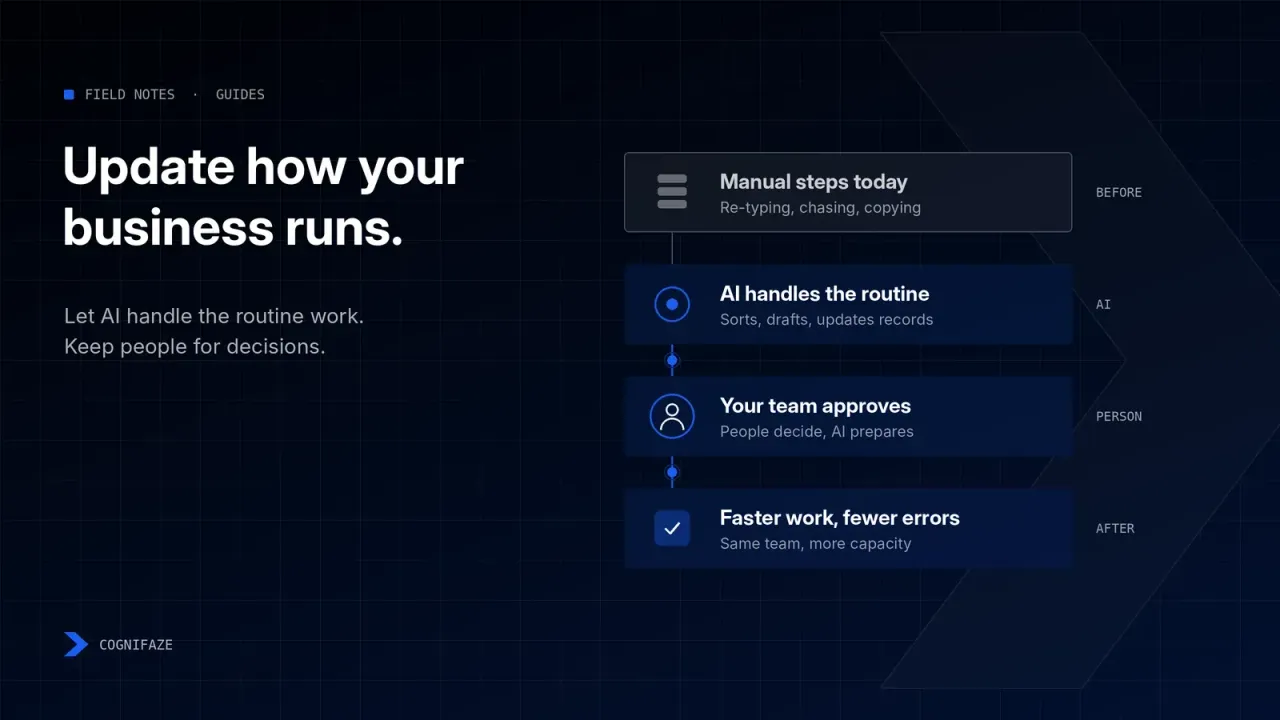
It does not mean replacing your team. It means finding the steps in your daily work that are repetitive, rule-based and slow, and letting a system handle them, so your people spend their time on the work that needs judgement. That could be answering common questions, passing details between tools, following up on enquiries, or preparing reports.
Where the pressure comes from
Customers expect quick answers. An enquiry that waits a day for a reply is easy to lose to a business that replied in minutes. Teams also lose hours to copy-and-paste work that adds nothing to the business. The cost of leaving things as they are is rarely one big failure. It is slower replies, missed follow-ups and tired staff, month after month.
What AI does well, and what it does not
AI is good at repeat work with clear rules, at answering common questions around the clock, at sorting and summarising information, and at drafting first versions of messages and content. It is not a good fit for decisions that carry real consequences, for unusual situations, or for work where trust between two people is the point. In those cases, a person should decide, and the system should prepare.
Why this is not all-or-nothing
Many businesses wait because they imagine a huge project. It does not have to be one. Pick one process, such as handling new enquiries. Make it work. Keep an eye on how it performs. Then move to the next process. Over time, several connected steps can be handled by a team of AI agents that each do one job, which is what we call AI infrastructure.
Keep your people in charge
The best systems are the ones your team trusts. That means agreeing the rules up front, keeping a person in the loop for anything important, and being clear with customers about what they are talking to. A system that your team understands will get used. One that nobody understands will be switched off.
Where to begin
Start by listing the repeat tasks in your business, then choose the one that costs the most time for the least judgement. If you would like a second opinion, our free automation audit looks at your repeat work through six short questions, and a person at Cognifaze can review your results.